AI foundations
Before you govern AI, understand the system.
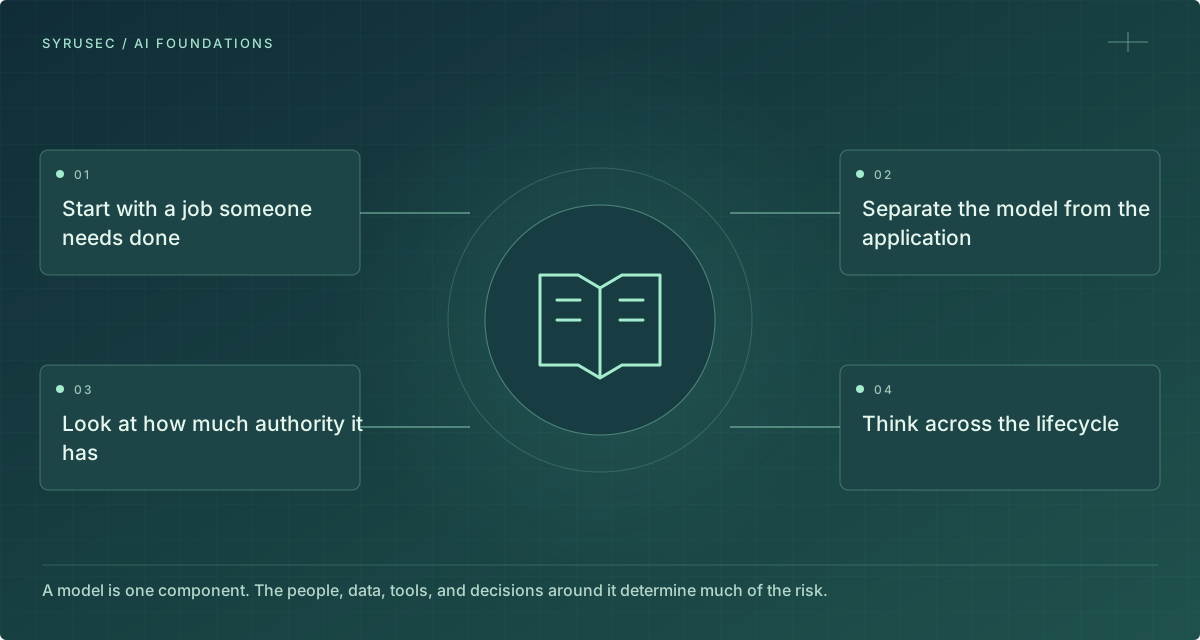
A model is one component. The people, data, tools, and decisions around it determine much of the risk.
Read and explore ↗ SyruSecAI GOVERNANCE · RISK · SECURITY
THE KNOWLEDGE LIBRARY
Explore practical guides, source explainers, learning paths, and exercises. Follow your question rather than a prescribed reading order.
16 guides
AI foundations
A model is one component. The people, data, tools, and decisions around it determine much of the risk.
Read and explore ↗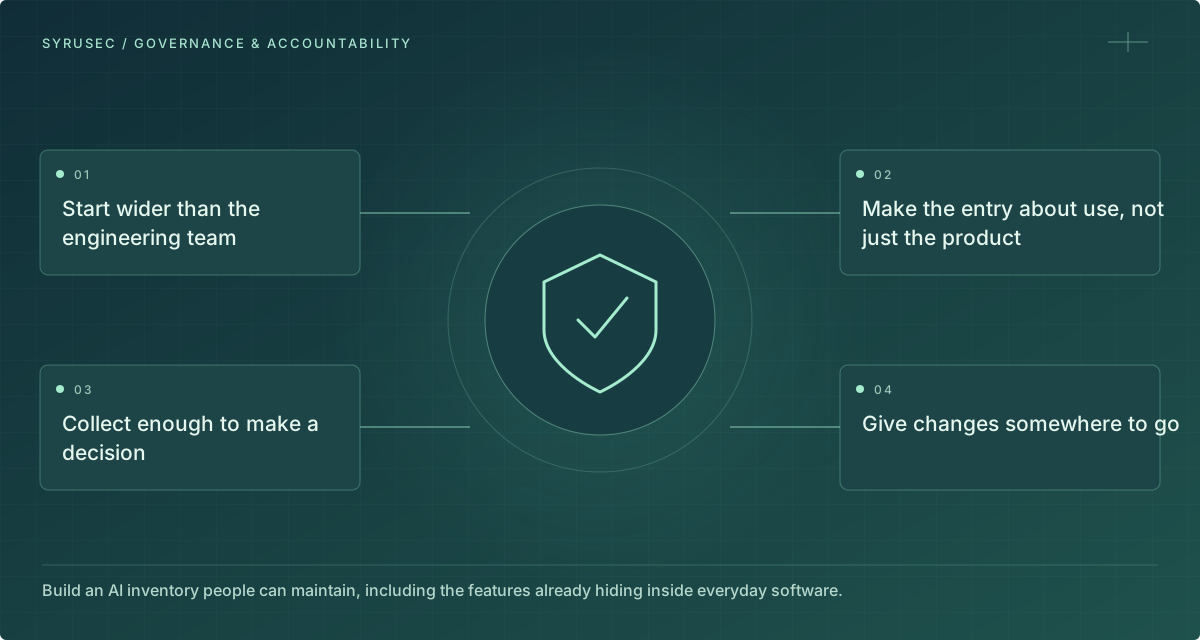
Governance & accountability
Build an AI inventory people can maintain, including the features already hiding inside everyday software.
Read and explore ↗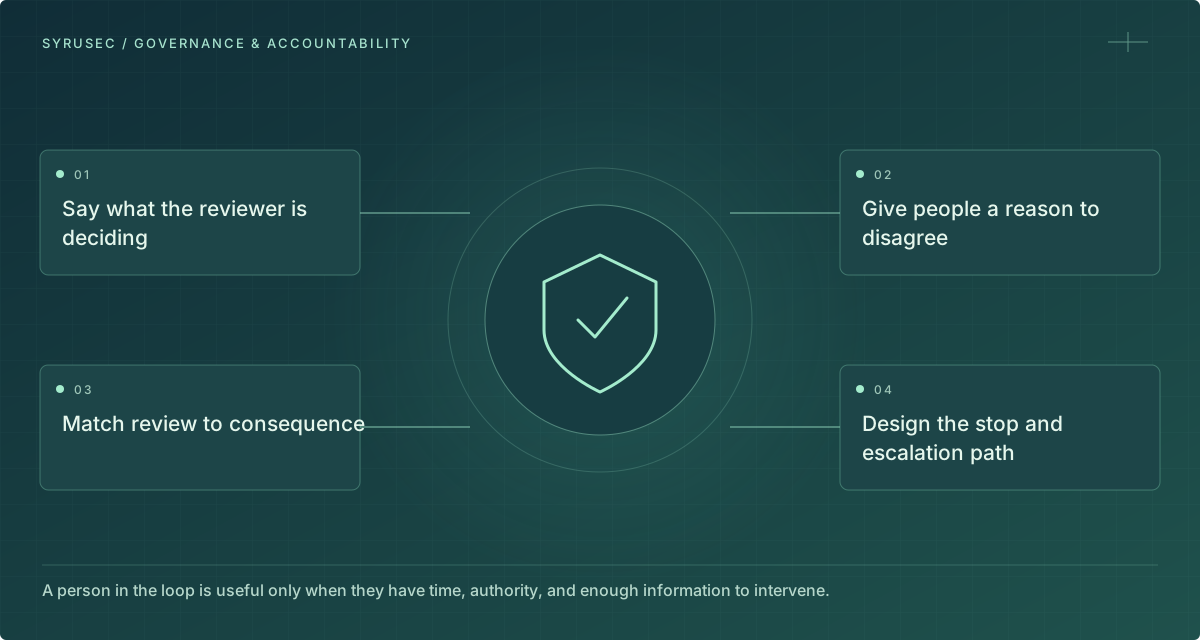
Governance & accountability
A person in the loop is useful only when they have time, authority, and enough information to intervene.
Read and explore ↗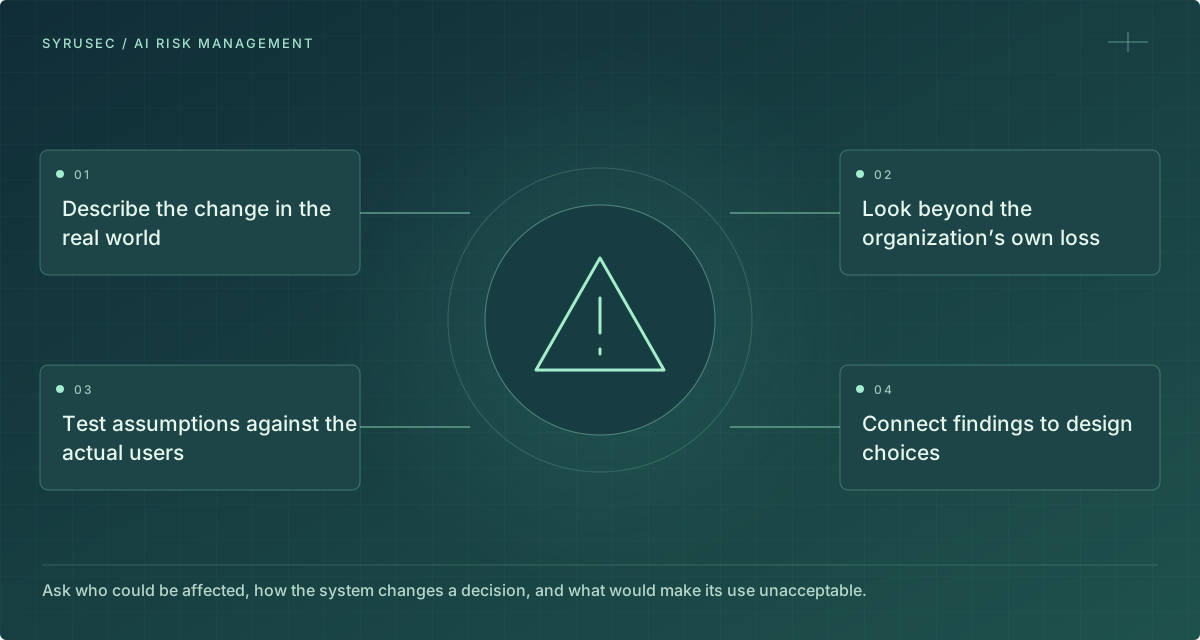
AI risk management
Ask who could be affected, how the system changes a decision, and what would make its use unacceptable.
Read and explore ↗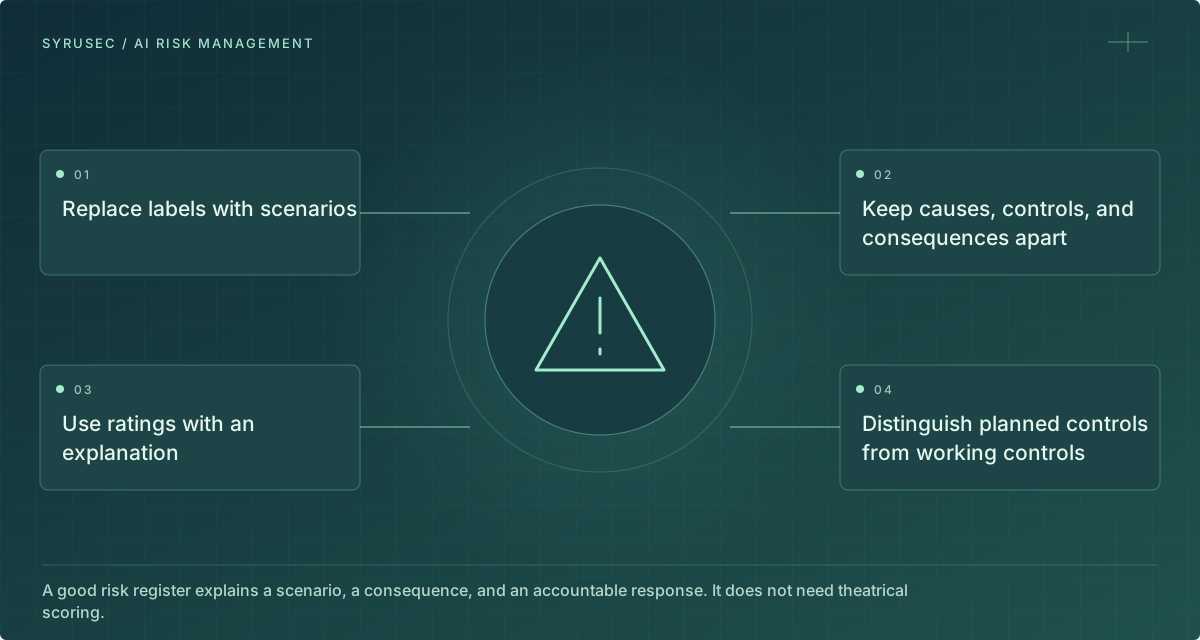
AI risk management
A good risk register explains a scenario, a consequence, and an accountable response. It does not need theatrical scoring.
Read and explore ↗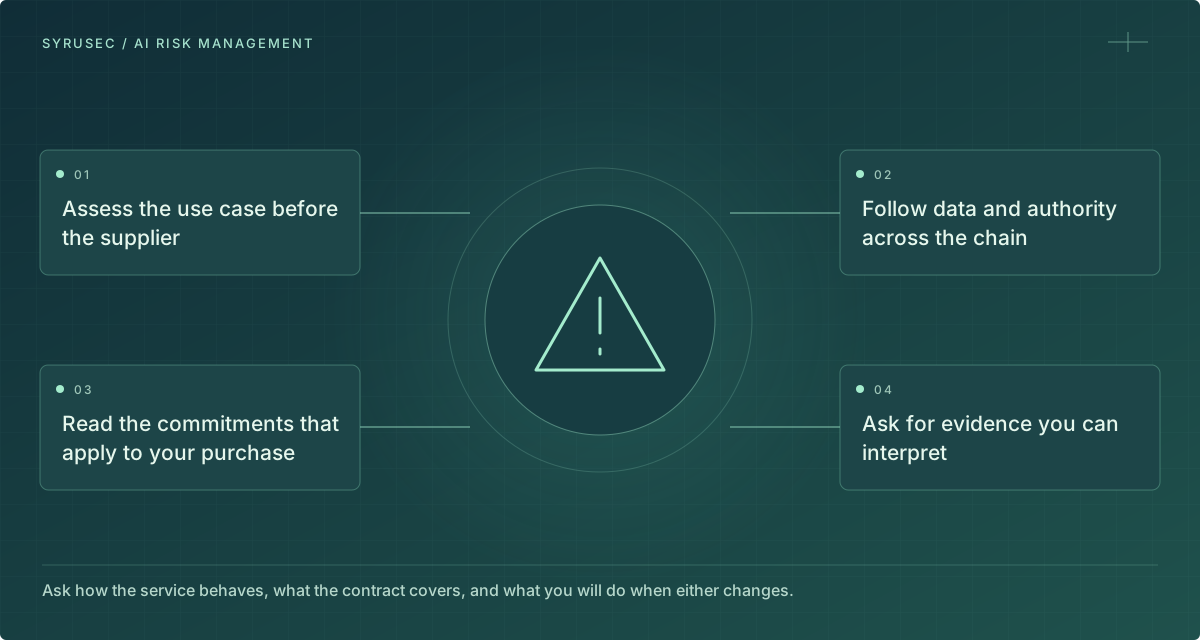
AI risk management
Ask how the service behaves, what the contract covers, and what you will do when either changes.
Read and explore ↗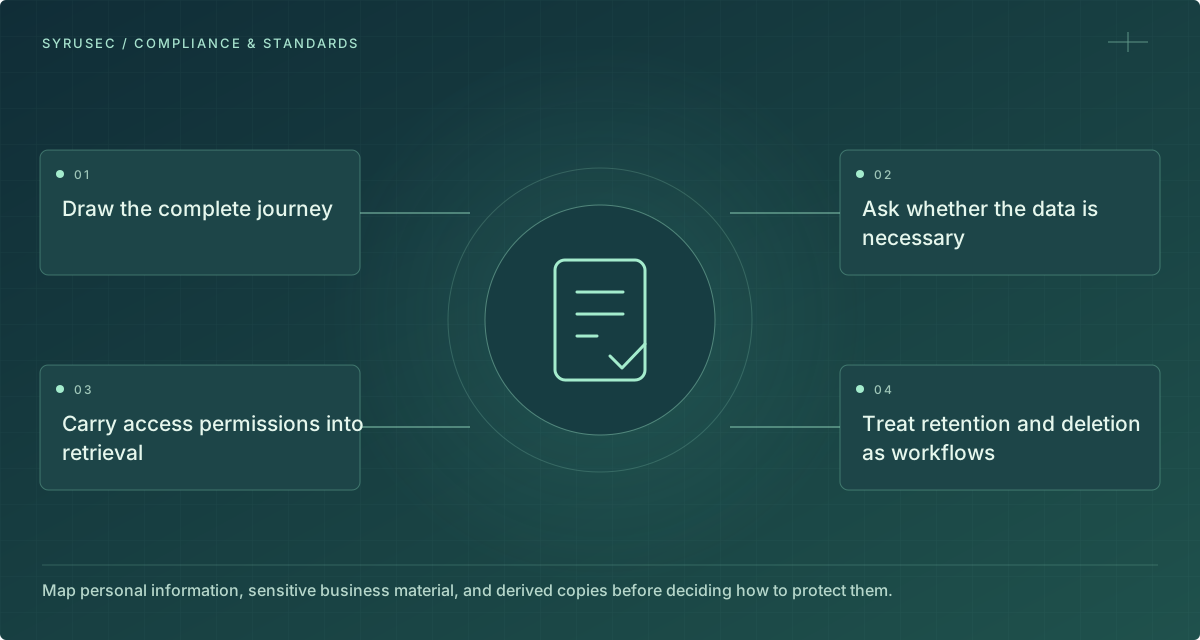
Compliance & standards
Map personal information, sensitive business material, and derived copies before deciding how to protect them.
Read and explore ↗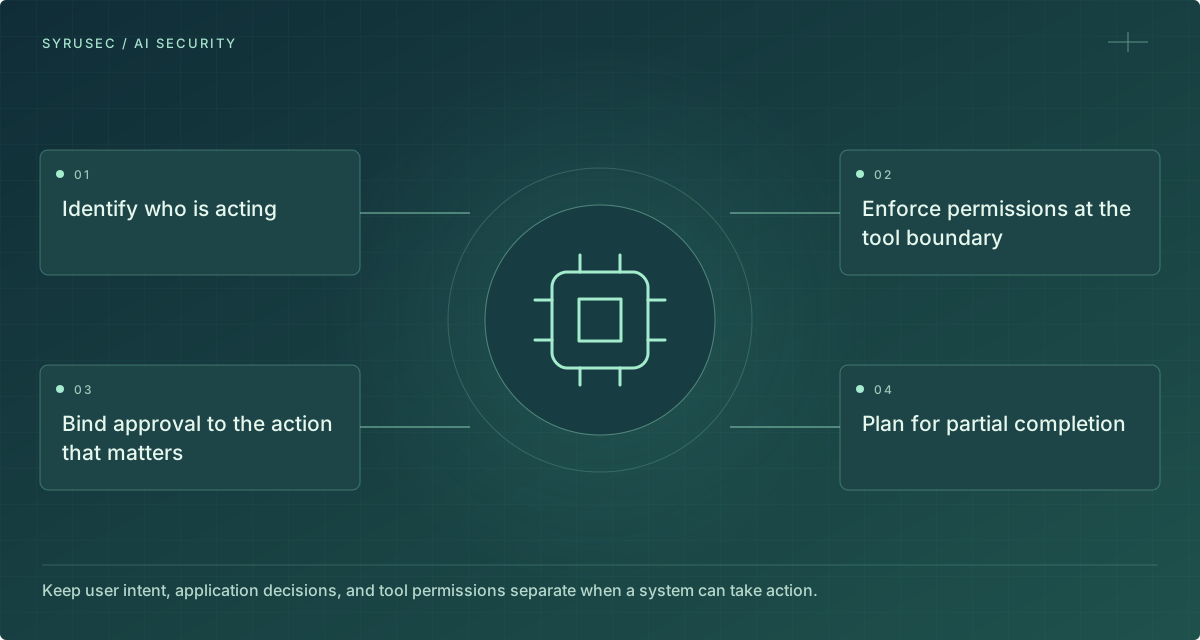
AI security
Keep user intent, application decisions, and tool permissions separate when a system can take action.
Read and explore ↗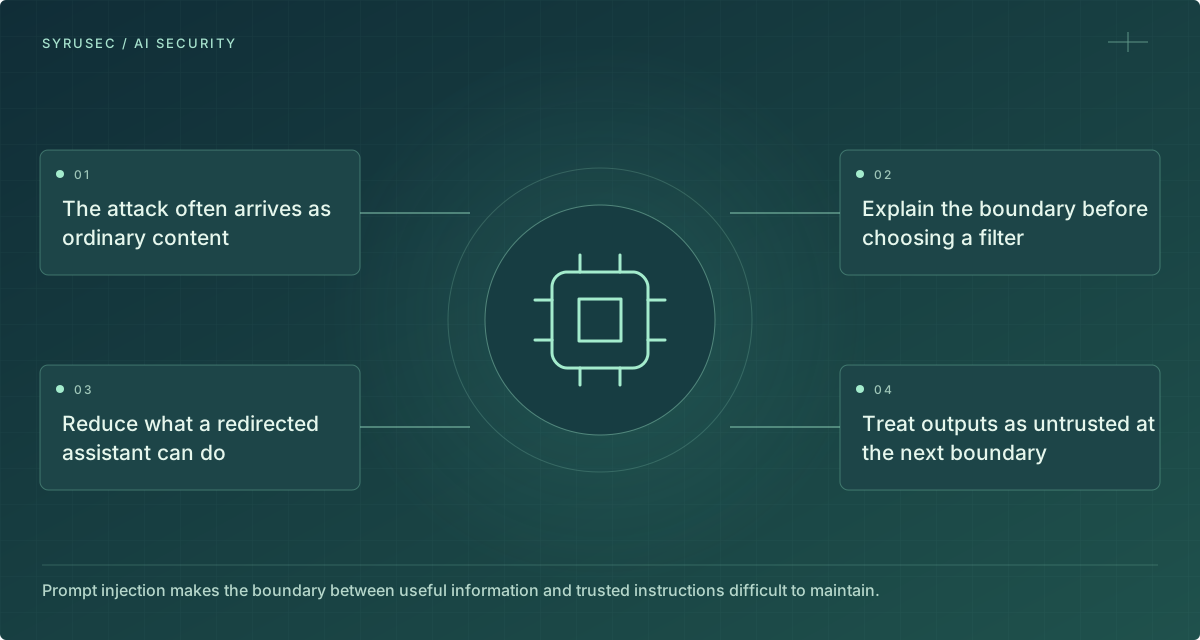
AI security
Prompt injection makes the boundary between useful information and trusted instructions difficult to maintain.
Read and explore ↗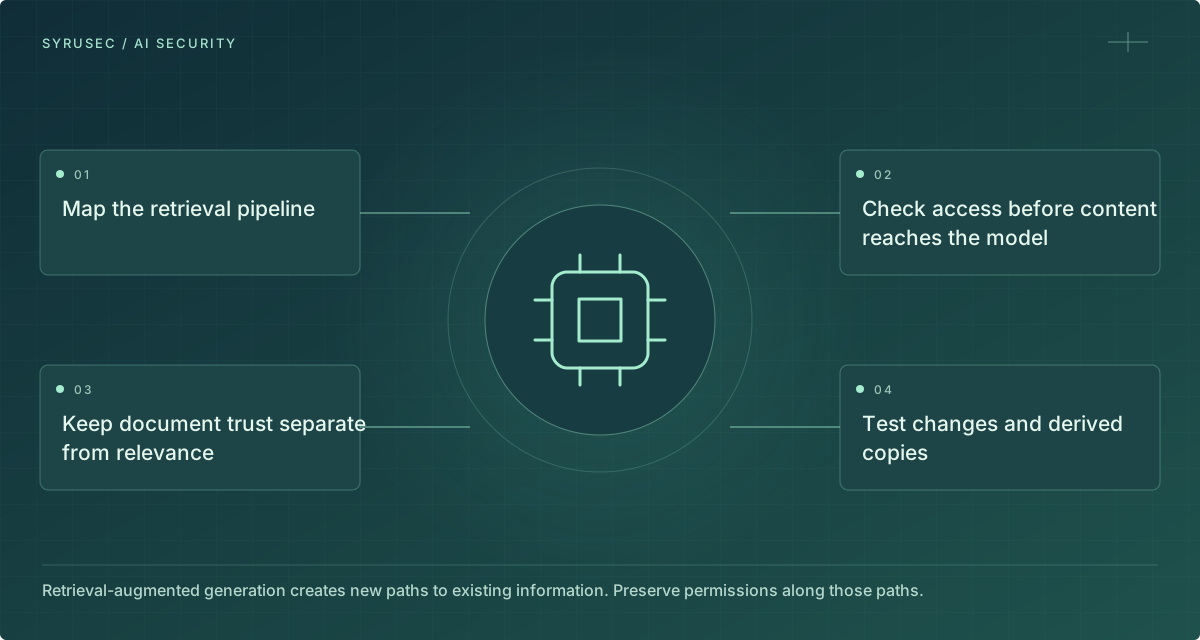
AI security
Retrieval-augmented generation creates new paths to existing information. Preserve permissions along those paths.
Read and explore ↗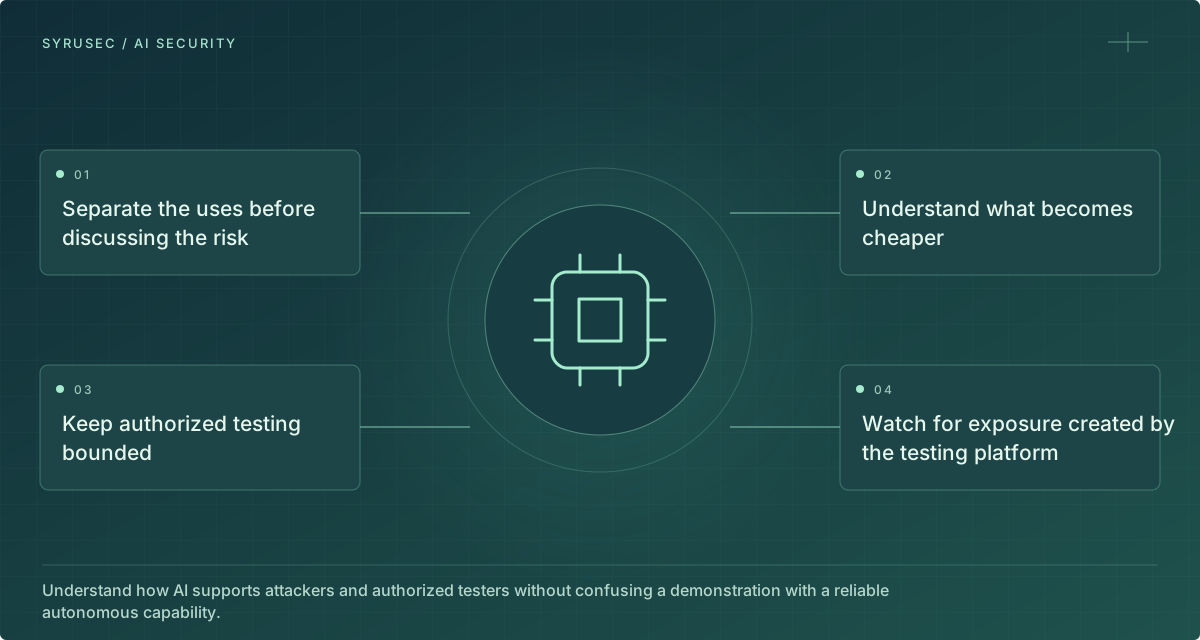
AI security
Understand how AI supports attackers and authorized testers without confusing a demonstration with a reliable autonomous capability.
Read and explore ↗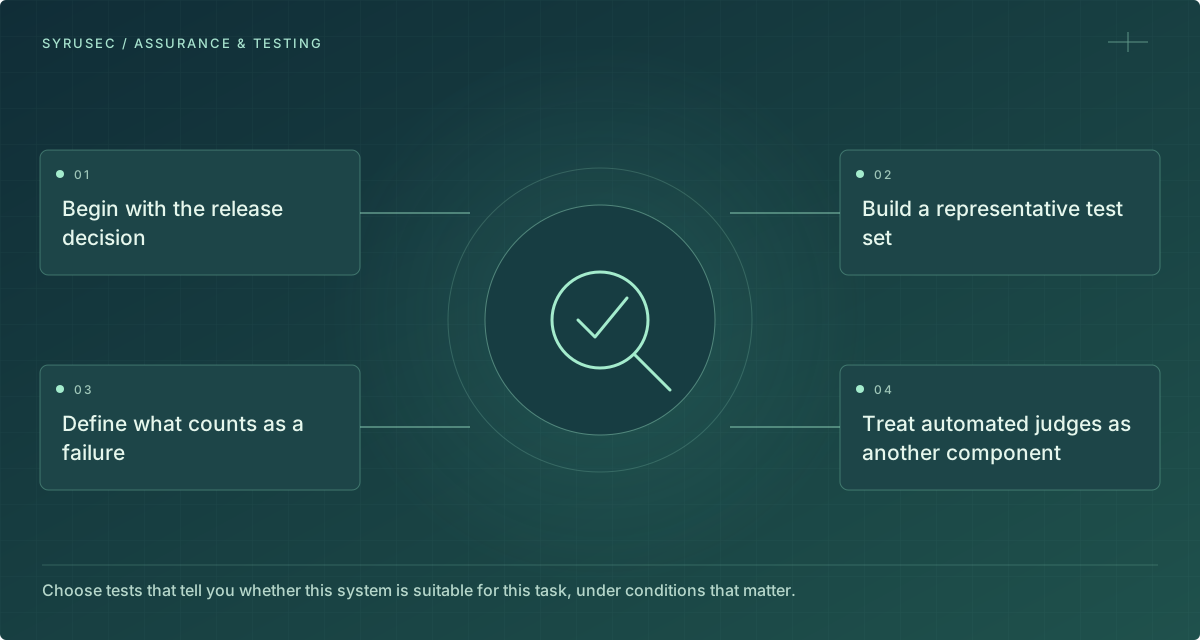
Assurance & testing
Choose tests that tell you whether this system is suitable for this task, under conditions that matter.
Read and explore ↗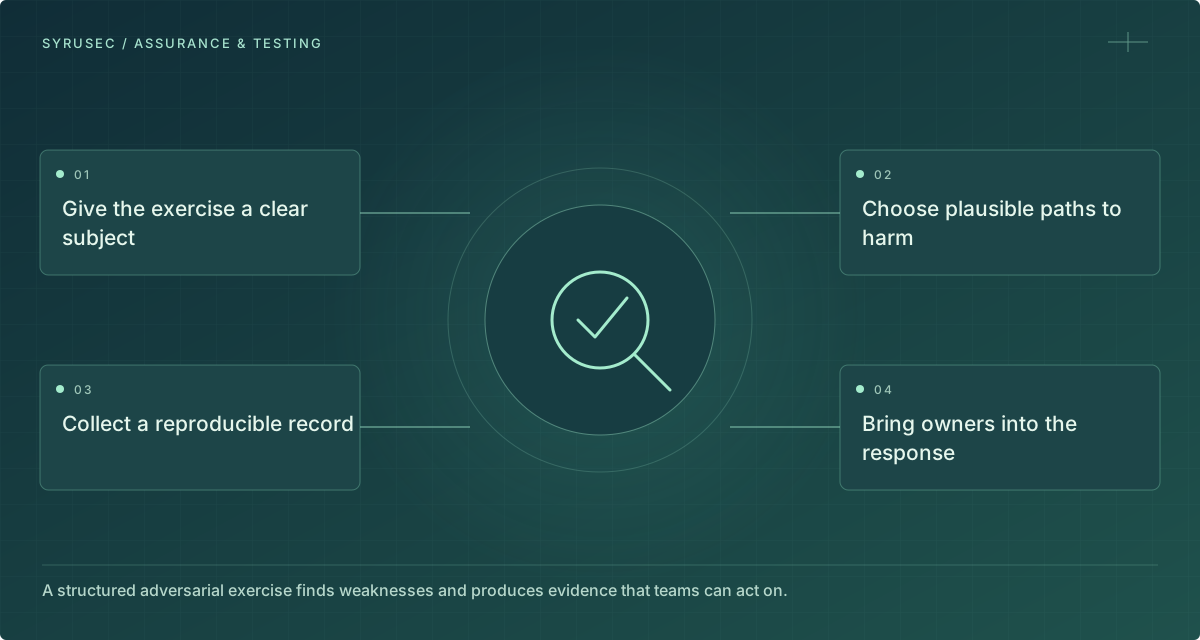
Assurance & testing
A structured adversarial exercise finds weaknesses and produces evidence that teams can act on.
Read and explore ↗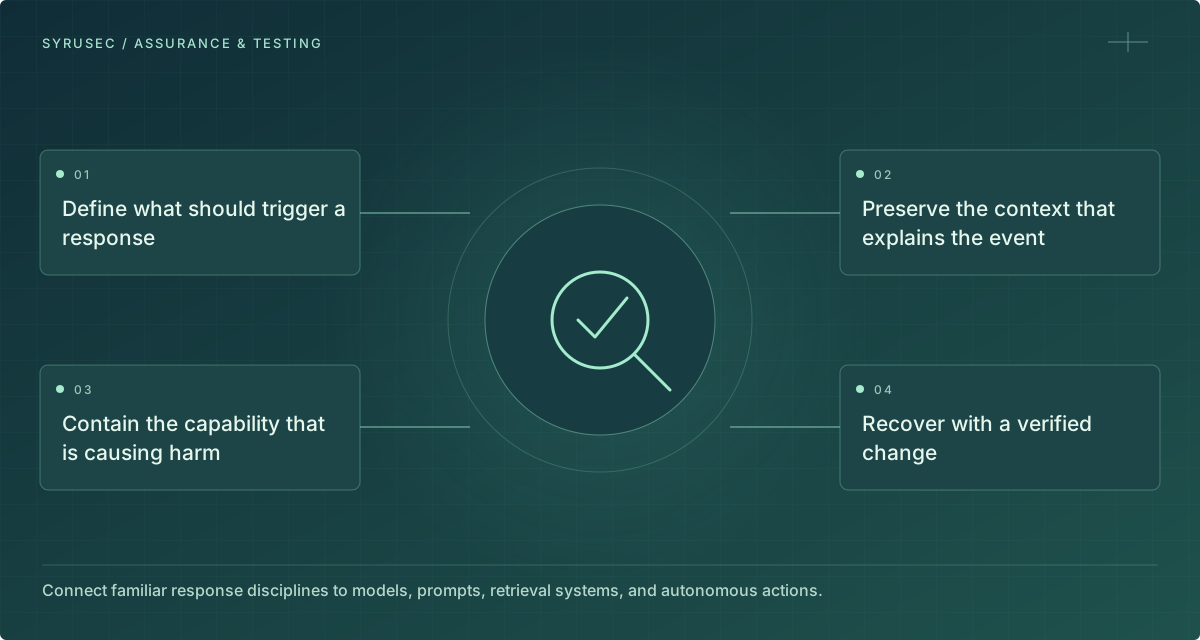
Assurance & testing
Connect familiar response disciplines to models, prompts, retrieval systems, and autonomous actions.
Read and explore ↗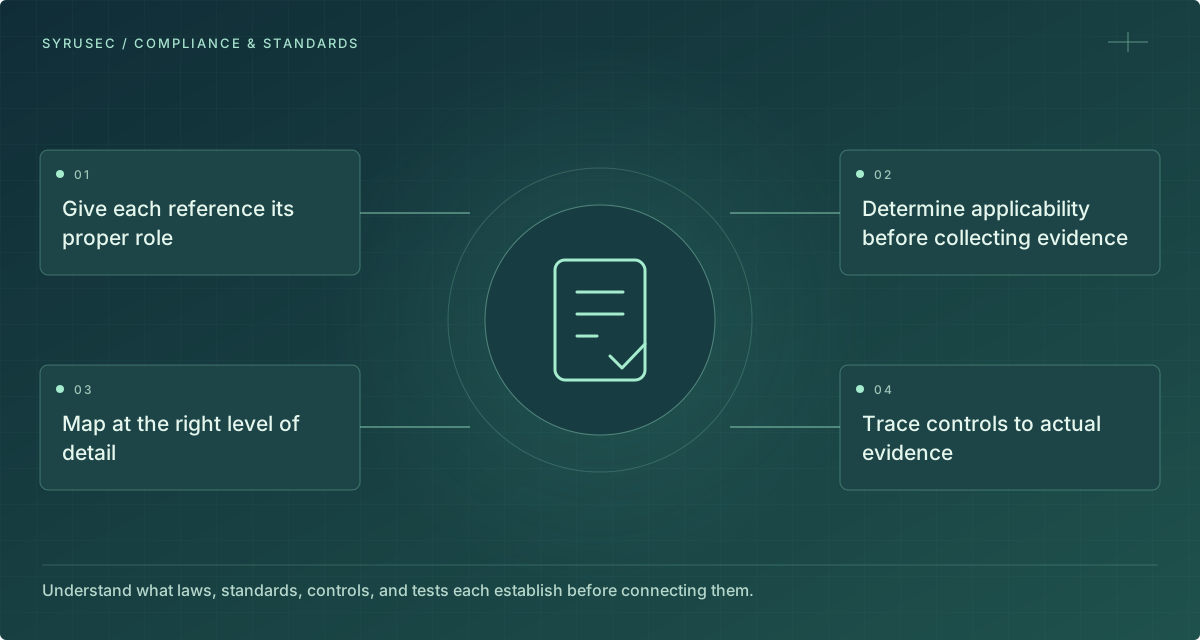
Compliance & standards
Understand what laws, standards, controls, and tests each establish before connecting them.
Read and explore ↗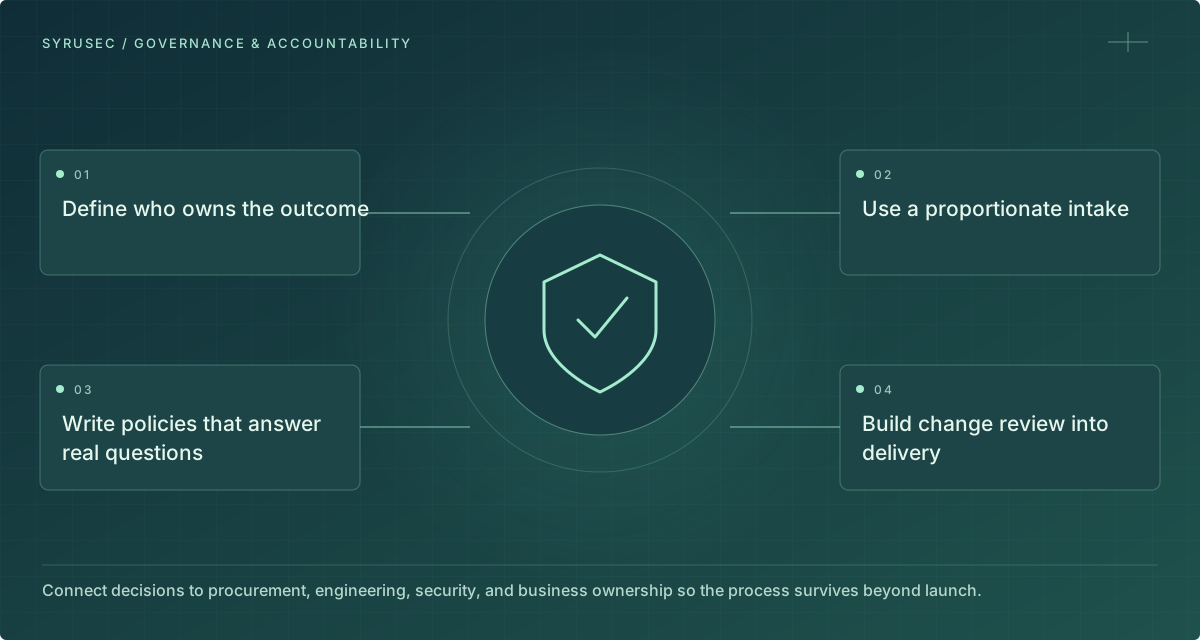
Governance & accountability
Connect decisions to procurement, engineering, security, and business ownership so the process survives beyond launch.
Read and explore ↗No guides match. Try a broader term or choose all topics.