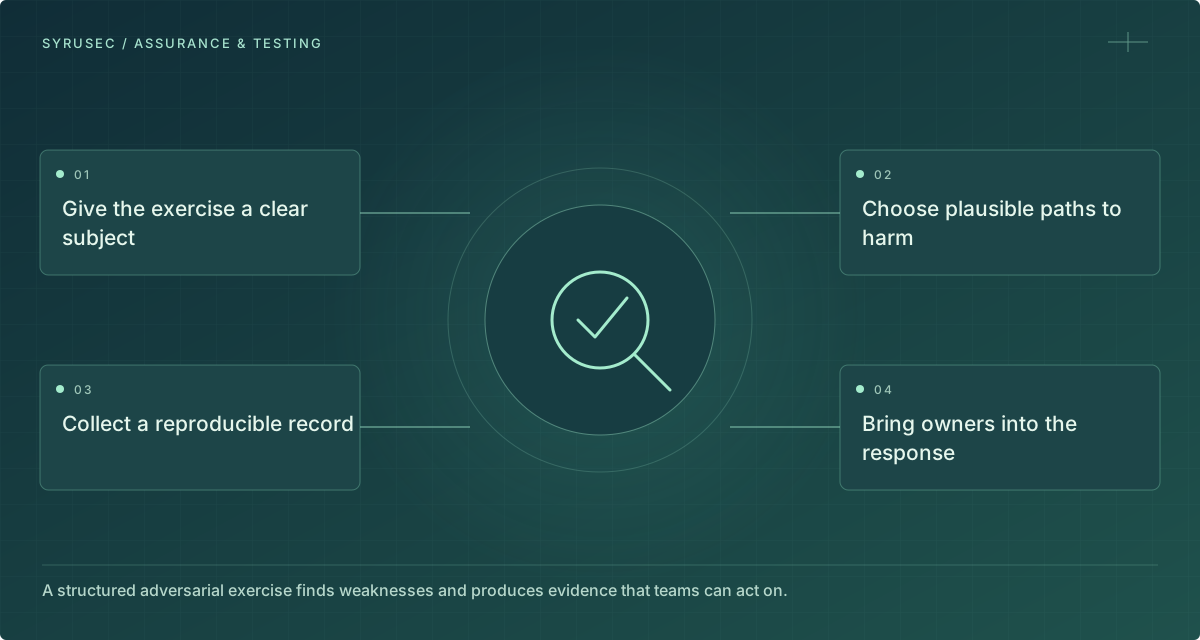
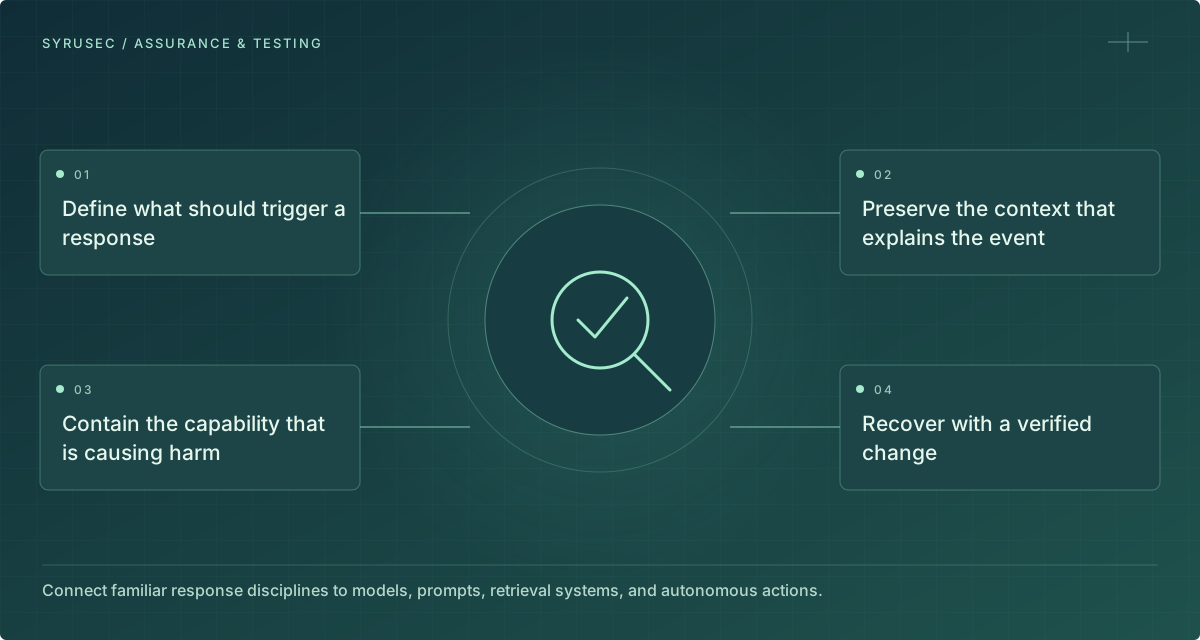
Begin with the release decision
An evaluation is easier to design when you can finish the sentence: “We will use this evidence to decide whether…” You might be deciding whether answers are grounded enough for support staff or whether an agent respects an action boundary. A generic benchmark score rarely answers all the questions a business owner needs resolved.
Build a representative test set
Include ordinary work, difficult cases, missing information, different languages where relevant, and known failure modes. Keep a separate set for final evaluation if developers have tuned the system against earlier examples. Record how samples were selected and which groups or conditions are underrepresented. A convenient dataset is not automatically representative of production use.
Define what counts as a failure
A fluent answer can be factually wrong. A correct answer can reveal information the user should not receive. A safe answer can be useless. Score relevant dimensions separately: accuracy, grounding, authorization, refusal behavior, task completion, and operational limits. Describe how ambiguous cases are reviewed so two evaluators do not silently apply different standards.
Treat automated judges as another component
A model-based evaluator can help review large amounts of output, but its judgments need validation against human examples and the task’s criteria. Check disagreement, position effects, and whether the evaluator has enough context. Do not let a tidy score obscure unreliable measurement. Keep important examples available for inspection.
Keep the configuration with the result
Record model version where available, prompts, retrieval collection, tool permissions, parameters, test data version, and execution date. Re-run appropriate tests after material changes. Use production monitoring to catch conditions the test set missed. Evaluation is a stream of evidence across the lifecycle, rather than a badge awarded once before launch.
PUT IT INTO PRACTICE
A useful next step
- Write the decision your test supports.
- Create normal, difficult, and prohibited examples.
- Define failure criteria before reviewing outputs.
- Version the setup and preserve informative failures.
Keep the result: record the decision, owner, supporting evidence, and the next review trigger.
Go to the source
These links support further learning. The worked example and practical exercise are SyruSec’s own educational interpretation.